Home automation, Portsmouth
Make your home or workplace more comfortable and efficient, with heating, lights and devices that work around your routine. We choose what would be useful together, and I help you feel confident using it. In Portsmouth and along the South Coast.
Who it is for
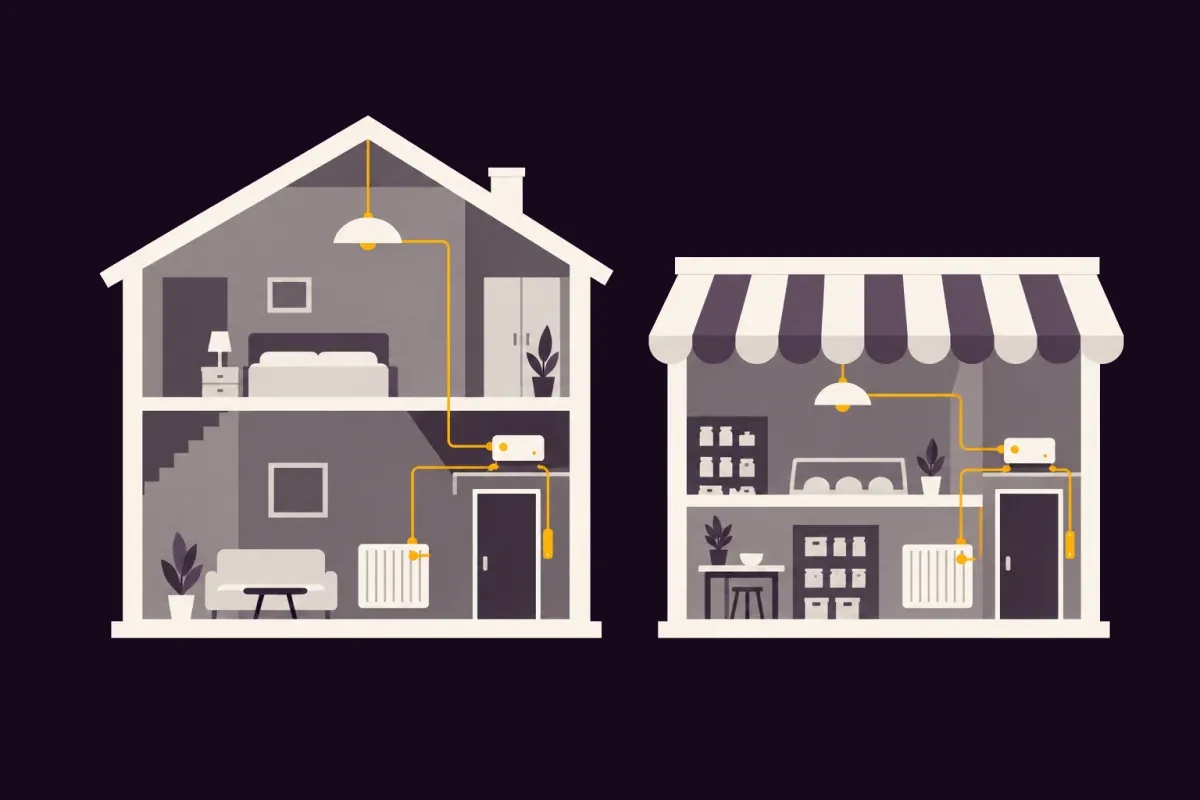
Homes and small businesses in Portsmouth and along the South Coast that want their lights, heating and sensors to work together, without depending on one company's app.
It suits you if you want simpler everyday routines, more control over your heating, or help getting the devices you already own to work together.
What you get
- A free consultation visit and a quote, on the mainland within 30 miles of Portsmouth.
- Home Assistant, on a small computer in your building. It is free and open source.
- The hardware sourced for you, or advice on what to buy yourself.
- Your devices installed and your network set up.
- The automations you want, programmed and tested with you.
- The controls you want: a web dashboard, Apple Home, Google Home or Alexa.
How it works
I visit your home or business, look at what you already have and what you want it to do, and give you a quote. I choose devices that work locally wherever I can, and I tell you which ones do not.
After that, the hardware and the code are yours to change yourself. Or you can retain me for £15 a month. If an automation stops working, send me a message and I fix it remotely, and I apply the Home Assistant updates for you. New automations and changes are quoted separately.
I run all of this in my own house, so I know where it goes wrong.
Why Home Assistant, and when I would suggest Rako
Home Assistant is free and open source, and it runs on a small computer in your building. The devices can come from any maker and talk over any of the common radios, so you choose them on price and on what they do, not from one catalogue, and what you already own is usually kept rather than thrown away. That is what keeps an installation affordable, and it is why I recommend it for most homes, small businesses and charities.
The computer itself need not be yours already. If you do not have one, a Raspberry Pi does the job and costs less than a single designer light fitting. I will help you order the right one for your home. It is yours from the day it arrives: it runs your home, and if you like, it can run other things too, from a music server to a child's first programming project.
A charity gets the same benefit: a one-off cost for hardware it owns, no licence to renew, and nothing tied to one supplier or to me. When trustees or volunteers change, the system stays understandable and another installer can pick it up.
Rako is a British lighting control system with its own hardware, fitted by trained installers. It costs more, because everything comes from one maker. If you want Rako, I can quote for it. For most people who want an affordable installation, Home Assistant does the job well, and the work I show on this site is built on it.
What it costs to run
The software is free. You pay for the hardware, once, and you choose it on price because it does not have to come from one maker.
Apple Home works locally with no subscription. Google Home and Alexa connect through Home Assistant Link, a separate subscription you pay to its makers, Nabu Casa. It costs £6.50 a month, or £65 a year billed annually. Those two are cloud services themselves, so commands given through them leave your building.
Support is optional, at £15 a month for remote fixes and updates.
I quote each job up front. Tell me what you need and I will tell you what it costs to build and what it costs to run.
Questions people ask
What does the £15 a month cover?
Remote fixes when an automation I installed stops working, and applying the Home Assistant updates so that an update does not catch you out. Faults caused by your own edits, new automations, changes and site visits are not included. I quote those separately, so you know the price first.
Do I have to replace the devices I already have?
It works with devices from many makers. I check yours before I start and tell you which can stay.
What happens if the internet goes down?
The computer is in your building, so devices that talk to it directly keep working. Devices that depend on their maker's own service wait until it comes back.
What happens if you stop supporting it?
Nothing stops working. The hardware and the code are yours, the software is widely used and open source, and another installer can pick it up.
How do you fix things if the system is local?
If you retain me, I connect over a private, encrypted link, only with your permission. Nothing is opened to the public internet. It needs Home Assistant on its own computer, such as a Raspberry Pi.
Do you cover my area?
I work across Portsmouth and the South Coast. Consultation visits are free on the mainland within 30 miles of Portsmouth. The Isle of Wight costs extra, because of the ferries. Further along the coast, ask me.
Work like this
-
My own house
Lights, heating and sensors from different makers working together. My own home is also where I try ideas, find the awkward bits and improve them.
For IT people
Home Assistant in Docker, with devices over Zigbee, MQTT and 433 MHz radio. Apple Home through the HomeKit Bridge, which stays on your network. Remote support is over SSH or Tailscale, with your permission, and needs Home Assistant on its own computer or a Raspberry Pi.
-
Home Assistant
Home Assistant setup and automation in Docker: Zigbee, MQTT and 433 MHz radio, presence lighting, heating, watchdogs and a nightly config backup.